The Story Behind the Story

Nothing is written in a vacuum. Words, even fictional ones, are connected to concrete days, circumstances, and memories. Writing YA The Girl on the Tube was no different than writing grown-up fiction Mother of My Son or The Ground Beneath Us. Here’s a little backstory of its publication journey:

About three years ago, an editor who had come across an article I had written for a partner ministry inquired if I’d be interested in writing YA fiction. I crafted a possible plot synopsis and enjoyed a back-and-forth email conversation but didn’t feel settled about signing a contract. This was strange because typically when someone says write I say how many words?  From time to time, I’ve prayed and asked God if he ever wanted me to write another book, he’d provide a publisher I felt I could partner with. Editor Jonathan knew his stuff, but he was working independently and, on my end, the timing seemed inexplicably off. More than that, producing a book requires a certain level of enthusiasm and, to my surprise, I didn’t have it.

Two years went by. I was getting ready to attend a ReachGlobal Europe women’s conference in Switzerland, (a generous gift from a U.S. church) and was more than ready to retreat. My current season was one of significant anxiety and relational strain and I was eager to meet face-to-face with the ReachGlobal counselor (pastor to missionaries) I had been connecting with over Zoom. We’ve loved serving in London, but there have been some difficult things to process. Before flying out, I noticed a fresh email from editor Jonathan. He was now a publisher at 10ofthose, heading up their YA imprint, and would I be interested in reopening our conversation? I would. But first Switzerland. First retreating. First attending to my unraveling mental health.

The four days in the Alps were glorious. Stunning and spiritually uplifting. Except for the eerie three minutes I stood, alone, peering down an old well in castle ruins. Transfixed by the absurd possibility of slipping through the railing and plunging to its stony floor, I sensed God was prodding me to pay attention, as if he was preparing me for something.

On the last day, before flying home, I felt “off”. By the next morning, back in London, unless I was flat on my back, I was throwing up. It took several weeks and multiple doctor visits to receive the diagnosis: Labyrinthitis. Symptomatically similar to vertigo but a virus, and therefore no quick solution to the debilitating dizziness. At first, I could hardly walk and for a long time, I couldn’t cross streets since the necessary back-and-forth movement rendered me dizzy to the point of falling. I couldn’t properly wash my hair because the usually unnoticeable scalp scrubbing left me nauseated.  Relational challenges had heightened too, and the battle(s) felt oppressive and spiritual. God was with me, I knew this, but his presence seemed far away and his voice muffled, as if I were lying crumpled at the bottom of a well.

 Into this dark space, like a white feather floating into a battlefield, a book contract from editor Jonathan landed in my inbox. I signed it, flat on my back, laptop on stomach,  and began pecking out ideas, cobbling together characters, and basically falling in love with all of them.

In this depleted season, writing The Girl on the Tube was like receiving an IV of fluids and returning to life. Even before our big move, I struggled to put the whole “London thing” into words. Where would I even start? But pouring all that emotion into a fictional, awkward, endearing 12-year-old and letting her tell her story – not mine, but emotionally similar – was escape and therapy all wrapped in one. Writing is work, always, and 80% of writing is rewriting. Even so, this endeavor, written in this season, was wonderfully, cathartically captivating. 

It’s not unlike God to bring us low, physically and emotionally, for his purpose and our good. That’s often how he becomes more and we become less, how we learn to lean on those around us (aka my sweet husband) and how we learn dependence on the root. He’s good like that, demonstrating both power and mercy, not only checking our pride but murdering it. He’s good.

I realize my sharing all this backstory may backfire. Typically, if someone talks up something too much, you’re liable to not like it as much. And I realize this little novel may not impact you as it did me to write it, but I’m okay with that. My heart is content. Whatever God wills to be will be. I’m simply grateful for this joyful season, for the gift of being able to write stories that point to a greater story, and for readers of all ages eager to dive in.

The Stories that Shape Us

There’s something healing about story. Stories draw us in to draw us out. Story invites us to get lost, to fall under a spell, to leave our world and try out another. And then, like a nimble surgeon, Story delves inside of us and gently pokes around, opening up rooms we thought were locked, digging through drawers we forgot existed, holding out dormant hurts and dried-up desires and dusty memories if only to get us to acknowledge they exist. All kinds of revelations and difficult to swallow truths slip through the side door of story.

But the real gems don’t leave us on the verge of narcissism. The best stories, the ones we can’t shake, tilt our gaze outward and upward. To people who aren’t us. To places we haven’t tamed. To truths and mysteries that surpass our little realm of self. The best stories point to the better, timeless, eternal Story.

That’s why I love fiction and adore writers. And that’s why many writers/artists, including myself, struggle with imposter syndrome because how in the world can I call myself a writer when Victor Hugo and Harper Lee did too? Granted, there is a gamut of literary genre and skill level. Not all stories have to be a classic to be worthwhile. We can unashamedly cram a pulp fiction paperback into our beach bag and not care if the pages get smudged with sun cream because while the story is entertaining, it’s not going to change anybody’s life. Even so, that book, that unique compilation of verbs and nouns, has something to offer. Escape. A new persepctive. A laugh or two. A means by which to swat flies. Still worthy of ink and paper. We may read it, enjoy it, and forget it. It’s still story.

Other stories shape us and live in our psyche forever.

Remember Corduroy, the little bear who lost a button and longed to belong? Who stirred our childish empathy, maybe for the first time? Children’s stories in particular burrow deep. The good ones leave an everlasting thumbprint on our still mushy minds. Most of us have warmer feelings for Charlie Bucket (Charlie and the Chocolate Factory) or Fern Arable (Charlotte’s Web) than we do for Jane Eyre or Captain Ahab because we met these young, relatable, endearing protagonists earlier on in life. Their stories captivated our little minds and put words to emotions and longings we couldn’t otherwise articulate. We lived the story. We were Meg Murray, (A Wrinkle in Time anyone?) Huck Finn, Anne of Green Gables, and Harry Potter. And all the while, without fully realizing it, we were absorbing truths like everyone feels lonely sometimes and friendship is hard and if the animals around you start talking you better listen up.   

In a month I’ll be releasing my own youth novel. I didn’t set out to write YA fiction but that’s where I’ve landed happily. It turns out crafting The Girl on a Tube was a journey I needed to take. Creating Addie Brown, a 12-year-old yearning to find her place in London, was unexpected therapy. And now it’s time to open the door and let her live in your head too.  It’s all a little exciting and unnerving and just plain sweet. Addie’s great company, and I can’t wait for you to meet her. Very soon.

UK release date is just a month away and I’d be so honored if you closed the writer/reader circle and met the eclectic characters I’ve been chatting with and listening to this past year. And who isn’t interested in winning a free book?

If you ‘ve been following my blog (thank you) you may have noticed I haven’t blogged in awhile (sorry) and that’s because Addie Brown has been demanding my attention. (As well as other writing projects.) To be honest, I probably won’t be blogging here on my site very often, but I most definitley want to keep our connection. So I’m moving to shorter, monthly, emails to keep you updated and, hopefully, pondering God’s goodness and life’s messes. Subscribe by May 5th and you’ll be entered to win a free copy of The Girl on the Tube. Subscribe here.

Thanks for journeying with me,

Rachel x

Preorder today! Avalialble both in UK and U.S.

Happy birthday Mother of My Son

Forgive me for not chiming in earlier. But before the month of June has completely slipped away…

Only four days left on a June Kindle sale for Mother of My Son! A digital copy can be all yours for the low price $1.99! Click here!!

There’s my attempt at a sales pitch.

Coincidently, or perhaps not, Mother of My Son is 10 years old, if a book’s birthday equates publication date. (Although the story lived in my head and giant early 2000 Dell computer years before then.)

Ten years later, would I change some things about the story or writing? Maybe. We all grow as people, and as writers. But I do love the story, and the people, and the scenes on the porch, and the ‘car chase’ with Gretchen, and Amber’s painting, and what Beth does to the cake plate…

If you’ve already bought, read, gifted, hosted a book club… thank you. Truly.

If you’d like to host a book club… let’s chat. We all know the magic of Zoom. In person would be fabulous too of course, if you’re reading this in the UK. (Or you own a jet to fly me across the pond.)

Thanks for reading. Happy summer.

Rachel

Vertigo

Two weeks ago, I was in Switzerland, gifted (literally) with a retreat for the women in our organization. Even as a writer, it’s hard to find words to sum up the time. Stunning comes the closest to describe the experience on all fronts: physically, relationally, spiritually.

One morning I walked to Burgruine Unspunen, old castle ruins from 1232 situated not far from our accommodation:

I was there alone and gleefully poked around the various ‘rooms’, all the while marveling at the surrounding alps, the gentle jangle of the cowbells ringing out over all. And then I saw this:

A well, I assume. Such a foreboding sight in an otherwise uplifting setting. Imagine ending up there, I thought, peering down so long I creeped myself out. That shot of the well is the one un-pretty picture I took from my jaunt in Switzerland.

I came home late Friday night, eager to show my family the other photos, the aqua blue glacier fed lakes, the grassy green foothills, the snow-capped alps.

But the next morning I felt as If I had fallen – no, I felt as if I was falling into that well, never to be caught.  The dizziness didn’t end. The nausea didn’t cease. It went on and on and on and on and on…

Vertigo, is what it’s been labeled after visiting two GP visits and one Chiropractor. (whether it’s the standard ‘ear crystal’ type or due to fluids/blockage in my ears I don’t know. I’m improving slowly. Slooooowly.)

Whatever it is and whatever is causing it, I have never experienced anything like it before. Unless I was lying down, I was falling, or so it seemed, careening off those gorgeous mountains I had just experienced into a dark, hard, and frightening place.

You can do a lot of thinking and praying and writing in your head lying flat on your back. Over the past 13 days, I spoke certain words and phrases into my phone, or scratched them in my journal, and eventually cobbled this poem.

I’m sharing it because although circumstances differ, I know I’m surrounded by others who are experiencing their own sense of vertigo, whether it be physical, relational, spiritual, or emotional. Who hasn’t been jarred, exasperated, perhaps exhausted by life’s highs and lows?

Jesus has known the highest high and the lowest low; he empathizes like no other. God is with us in both.

And while nobody welcomes it, falling causes us to instinctively reach out and grab something – or rather someone – who is constant and certain, faithful and true.

Vertigo

You lift me high,

so high.

Up to the peaks in a Swiss alp sky,

where fear gets a thrashing and anxiety dies,

grace rolls like green hills and hope multiplies

as what lay buried stands up alive.

You bring me low,

So low.

Down to the end of myself I go,

to the grave of my doing,

past the tantrum of my soul

where pride lays in pieces and my mind seeks to know

your heart so wounded,

your death crushed soul.

From heaven you came to the belly of the low

To be raised on a tree, to the grave to go.

Death sneered for two nights

to be trampled on the third,

my God did not forsake you

my God so loved the world.

You’re in the sunshine

you’re in shade.

You bring the stillness

you bring the waves

that crash me to your shelter and pin me to your side, 

Shepherd of the struck-down low

High King of the skies.

Brilliance in Neutrals

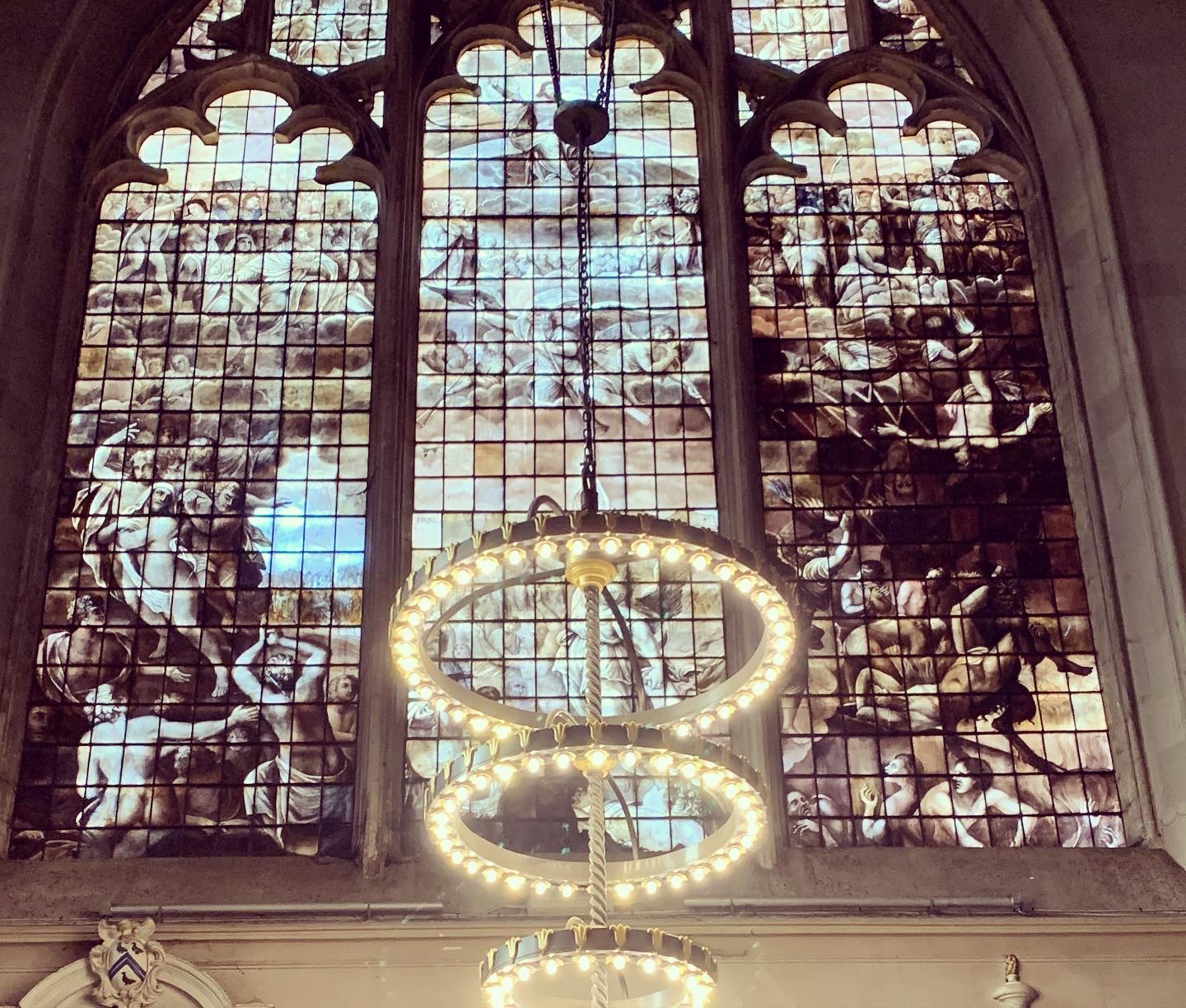
One of the perks of living in Europe is that it’s so very close to… well, Europe. Hence, we’ve seen a lot of cathedrals. London alone has dozens, and while I would never argue that if you’ve seen one cathedral, you’ve seen them all, European cathedrals and chapels do offer a predictable checklist of characteristics: vaulted ceilings. Intricate artistry. Stained glass windows as colorful as Jolly Ranchers. Perhaps that’s why, on our recent day trip to Oxford, the stained-glass west window of Magdalen College Chapel stood out.

It wasn’t colorful.

No showstopping scarlet and jade tones, only gentle neutrals. Subdued browns and greys depicting a sobering scene of the Final Judgement. Only pops of blue sky poked through areas of transparent glass.

The west window wasn’t flashy, but it was captivating.

This Friday, many of us will enter a church or a chapel or a cathedral to contemplate the death of Christ, the man who was God who didn’t strut through our world with pomp and pageantry but “had no beauty or majesty to attract us to him, nothing in his appearance that we should desire him.” (Isaiah 53:2)

Even so, he captivated multitudes. Still does.

There is nothing glamourous about death, least of all his brutal one. A painter wouldn’t need to stray far from a sepia palette to capture the Judean landscape, the nails and the hammer. The crown of thorns. The crosses. The tomb. The stone.

Lots of browns, lots of dirt and earth, lots of people – some jeering, some weeping – and yes, lots of blood red.

A bleak moment in history that beckons even now. A gritty scene that draws us in. For some, draws us to our knees.

The friendly green palm fronds, that was last week.

The other-worldly dazzling white clothes of Christ’s ascension, that comes later.

But this moment stunk of death. A dark day that got darker and darker until the light in every sense went out altogether.

Jesus the baby entered quietly, he died as a man brutally, he rose as Lord victoriously, to save ordinary people: those with addictions and boring jobs. Dashed dreams and fractured families. He gave up his brilliant splendor to save our dusty, dingy souls.

That is the glory, the beauty, of the old, rugged cross.

 +         +          +

I’m in my happy place when I’m wandering a new city and rambling about it in writing afterwards extends my stay. So ‘cheers’ if you’ve stuck with me thus far. (Penned this after our afternoon in Oxford.)

Wanderlust

Backpack on my shoulder

new ground to explore

thru gardens sweet and scattered streets I’ve never walked

before

me have trod many

before me lays the world

and in this space of breath and grace

the dead speak again once more.

(some interesting history on the Magdalen College Chapel window)

https://www.independent.co.uk/voices/the-resurrection-at-magdalen-college-1279624.html

To love a child

If you could relive a single day what would it be? Today, a week after my son’s wedding, I’d chose a magnificently ordinary day:

He would be 5 or 6, young enough to still call me Mama. Old enough to ride bikes to the Library. Past Jefferson School. Past the Brunner’s house. To the downtown library where we’d rifle thru the cubby of new books and admire the fish. Afterward, we’d stop at Tess’s Twist across the street and spin on the twirly stools while we slurped ice cream cones. The outdoor counter service ice cream shop has been long gone and, incidentally, the property now boasts Father’s Fats where we celebrated his and Gabby’s engagement last summer.

With sticky fingers, we’d bike back to Fremont Street, to our House with the Red Door and in our little kitchen, I’d wash his little face. Even now I can smell the sweet, earthy scent of his sweaty summer forehead.  We’d play trains up in his room with the glistening wood floors and red curtains.

I wouldn’t rush. I wouldn’t disrupt the make-believe world we’d created by slipping away to take care of something as mundane as laundry or bills or dinner. I’d see how long we’d go building viaducts for Thomas and Percy. Hours maybe? I wouldn’t rush.

And I wouldn’t rush when it was time to tuck him in. I’d say like I invariably did, “Two books tonight.”

Like always, he’d negotiate. “How ‘bout five?”

And instead of saying, “Three. Only three,” I’d say, “Five it is!” And after the fifth, I’d reach for a sixth. Maybe a seventh.

And his eyes would take on that impish twinkle and we’d read that silly book called Underwear! and he’d fall into that infectious laugh that shook his whole body to the point he’d sometimes fall out of his chair.

I wouldn’t rush a second of it.

I wouldn’t rush.

I do not mourn the fact that he grew up. What a gift to be present for it. What a gift to have him this long. That kind of time together is not taken for granted. And I rejoice that he chose an excellent bride, and she chose an excellent groom.

A couple months before the wedding this poem tumbled out. I wrote and shared a different poem for them, the couple, about them. To them. I often have to write my emotions out, somewhat like working through a fever, so this one was more for me and probably veers into self-absorbed. But I suppose that’s an unavoidable characteristic of processing strong emotion, processing life, processing what it is to love a child.

My son is getting married

My son is getting married and the day is strange and right.
He’s grown so fine and tall and I pray he walks in light with his chosen one beside him
as partner and as friend,
the path of life unfolding as childhood comes to end.

The little boy is gone now, has been for some time.
Trains and trinkets put away, his hand’s no longer mine.
Yet I still catch the twinkle
in his brown eyes deep and dear
of the boy he was – still is – in my memory of the years.  

Of camping trips and snowmen made and bike rides to the park,
chocolate frosting and breathless laughs and stories that would mark times of sweet discovery,
his and also mine,
the swell of love felt for a child you have only for a time.

And my regrets of when I fell or failed to see his need, 
I ask the Lord to fill the gaps, give grace and intercede. For there are days I’d do again
if God granted me the chance
but life is not a repeat show but an ever-pulsing dance.

As he journeys on now, his bride close to his side,
let go
release
give thanks
receive
the treasure sweetly tied to the gift of who he is, and was, and help me to embrace
the rush of joy
the jolt of change
and stories drenched in grace.

What to Kill

It’s not often that the word kill moves us to buy something. Except when it comes to weeds. We want our weeds gone, not wounded, not rendered sickly, but dead. So much so that we may be tempted to reach for a bottle that boasts the promise killer.

Even if a pair of gardening gloves and a sturdy hoe are our weapons of choice instead of chemical warfare, any gardener worth her seed knows the survival of wanted plants depends on destroying that which is unwanted, the weeds that persistently threaten to rule.  

Weeds must be killed. Otherwise, they’ll kill.

This past spring, I planted my first rose bush. I rescued the darling from a 50% reduction table and figured if she didn’t survive, it wouldn’t be much of a loss. When I planted it, it was about the size of my hand, void of leaves or buds. Happily, it’s thriving and in bloom.

My gardening buddy, the neighbor’s cat, next to my budding rose bush in early June

But those weeds! Who do they think they are encroaching on my sweet little rose bush? How dare they.

Before I planted, I attacked the patch or ground with a hoe and rake. Every few days I strangle those ever-invading killjoys with my hands, or I bring out the big gun, a hearty weed puller who’s become a friend. Sometimes the roots that emerge are shockingly enormous, and I have wondered if I could pretend their parsnips and make a soup.

Is it a weed or a vegetable?

All that work and still the weeds come back. All that effort and a couple days later, there they are again, rearing their beastly heads. The problem may lie partly with me and how I sometimes yank too swiftly, failing to extract the entire root.

The bigger the weed, the deeper the root, and the more exertion it takes to destroy. This is true for weeds in my garden as well as the weeds that crop up in my life. At first, I may not notice my stray thought, my biting remark but, left untended, small weeds grow into big weeds. The longer we let that thought go unchecked, the longer we entertain that activity that we know to be wrong, or give into that kind of speech, the harder it is to untangle ourselves. We may come to like our weeds, even mistake them for flowers.  

But there is hope.

As believers, we strive to live for Christ yet fail daily. Yet his grace is sufficient daily. We fight against the flesh, the unwanted, destructive weeds that seek to choke and destroy. Weeds like pride, grumbling, self-absorption, greed, jealousy, and rage. And then there are weeds that seem ‘softer’, like dandelions, like people-pleasing or discontentment, that prove to be just as poisonous.

Often, we spot weeds in someone else’s garden before we notice our own – a weed (and a menacing one at that) in and of itself. As believers, we are not to coddle, excuse, or hide these weeds, our sins, but kill them, as Paul instructs in Colossians 3:5.

Put to death, therefore, whatever belongs to your earthly nature: sexual immorality, impurity, lust, evil desires, and greed, which is idolatry.

And he goes on in verse eight. “…you must also rid yourselves of all such things as these: anger, rage, malice, slander, and filthy language from your lips. Do not lie to each other, since you have taken off your old self with its practices and have put on the new self, which is being renewed in knowledge in the image of its Creator.”

Discard the old and display the new. Uproot the weeds and nurture virtue instead, trusting God to blossom his goodness in us because our life is his life.  Our work, his actually his work, his tending in us since we are but branches clinging to him, the vine. (John 15:5)

Therefore, as God’s chosen people, holy and dearly loved, clothe yourselves with compassion, kindness, humility, gentleness and patience.  Bear with each other and forgive one another if any of you has a grievance against someone. Forgive as the Lord forgave you.  And over all these virtues put on love, which binds them all together in perfect unity.

The battle against our weeds is constant but worthy. Who doesn’t enjoy a gorgeous well-tended garden? Who hasn’t been touched by a life of kindness and sacrifice? Perfection isn’t possible, yet there’s a notable distinction between perfection and letting the weeds grow wild. There’s a chasm between trying to live righteously in our own strength through gritted teeth and trusting in the power and forgiveness of the Righteous One who gave it all for all, who slayed sin and death.

Tend the garden. Kill the weeds. Fall in love with the Christ who is preparing a great garden city that bears no weeds at all.

For you died, and your life is now hidden with Christ in God.  When Christ, who is your life, appears, then you also will appear with him in glory. (Col. 3:8)

Regent’s Park
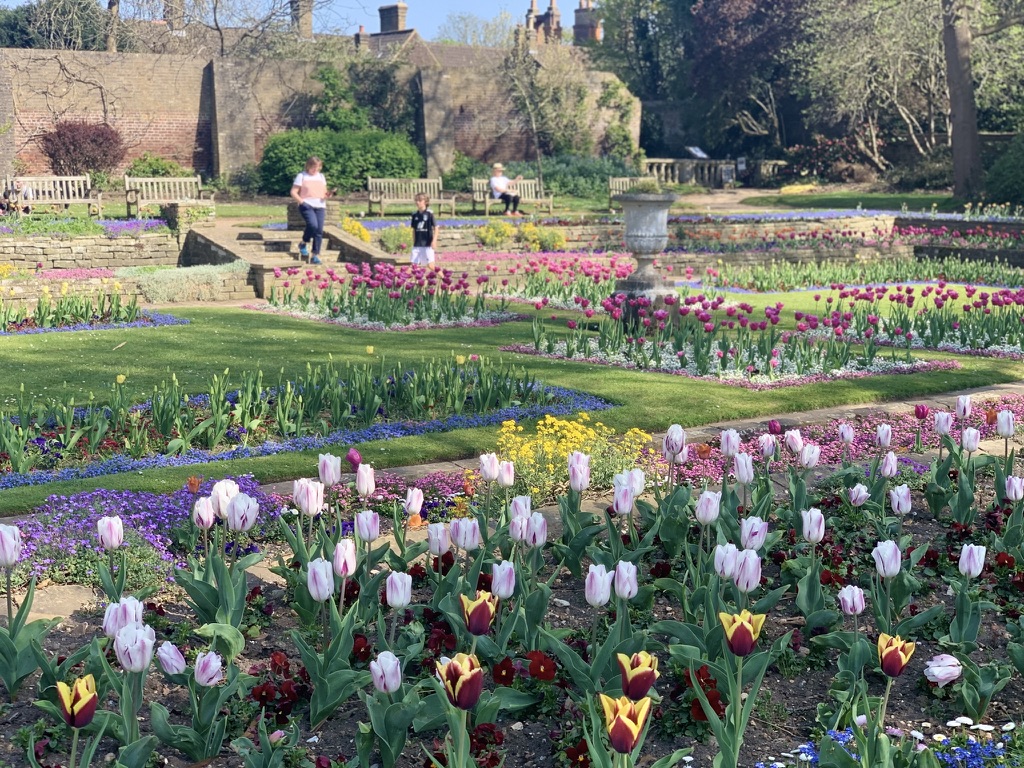
Cannizaro Park

Bins and Basements

Yesterday I met with my prayer squad: three British friends, me, and Jackie, a fellow American and native Wisconsinite. Somehow, Jackie and I got to talking about how moving to London forced us to sort and purge possessions and decide what should be stored in bins in our respective parents’ basements.

“Different kind of bin,” I remembered to clarify. In the UK trash/garbage cans are bins. The ones inside the house are bins, the ones outside are wheelie bins, because they have wheels. Here, Bin it means toss it. Not store it.  

“What’s a bin then?” one British friend asked.

“A box. A plastic box to store stuff in.”

“That’s a bin?”

“Yes,” I said. “What would you call it?”

“A plastic box.”

“Right.”

“And the bins are kept in a basement?”

While Jackie went on to explain that storing things in bins in basements was a very common American thing to do, I was recalling an episode from months ago, when I borrowed Christmas costumes out of storage from a church worker who stressed the items needed to be returned. Don’t worry, I had assured. I’ll put everything back in the bin! Probably should have clarified my intentions.

“How many bins are you allowed to have?” one friend asked.

“Allowed?” I said, confused by the verb. “As many as you want. Depends on how big your basement is, which can be dangerous because you end up keeping too many things. Our basement ran the full length of our ranch house.”

I’ve gotten into trouble with this word before, so I rushed to explain that ranch merely referred to the style of our single-story house. Living in a ranch is not the same as living on a ranch. We’ve literally been asked how many horses we owned. Doesn’t help that we Americans periodically refer to one another as dude.

“I can’t imagine having all that space,” another said. “What do you do with all of that space?

“Fill it up. With bins.”

“So basements are used only for storage?”

“No. Some of the space is used for storage and some of it might be finished, used for living. For the kids usually.”

“The kids?”

“Yeah, when you have people over or when the kids have friends over, the basement is often where you put the kids. Elijah and his friends would hang out in the basement all the time. Sometimes I’d bring them pizza, sometimes they’d all sleep in the basement.”

“But they like it,” Jackie added. “The basement’s not a punishment. The kids and parents both like having their own space.”

This, we have found, is an Americanism. Maybe it’s a space issue but here older children and teens (not the under 10’s – they’re tucked into bed at 7) tend to stay at the dinner table when company’s around. Maybe not for the entire three-hour dinner, but for a good portion of it anyway.

With no basements in London, it occurred to me that they might be envisioning a crypt, which are abundant here, and I left that day hoping my English friends didn’t think Americans kept their children and rubbish in crypts beneath their hundred-acre dude ranches.

Conversations like this, where words need to be teased out for their cultural definition, are not rare; English may be our common language, but we haven’t come to a consensus on what all the words mean. Trickier yet, is the unspoken. When is it appropriate to hug? Laugh? Be direct? Help yourself? Will asking a personal question strike as rude, or demonstrate our friendship? And how long and how well do we need to know each other before we are friends? An hour in America? A year in England?

We might not be aware of it, but we interpret gestures, smiles, jokes, volume, facial expressions through our cultural lens. My friend from West Africa once told me that in her home village if you saw someone you knew you’d shout hello! even from a distance, even from across a busy street. It’d be rude not to, and shouting wasn’t rude. Londoners, in many contexts, would say otherwise.

Neither is right or wrong. It’s culture.

In our three and a half years of living here I’m sure I have overshared, asked insensitive questions, interrupted with too many uh-huhs (very American), and boasted about a deal I snagged (Classic midwestern-ism: Do you like my dress? I got it for a dollar at a garage sale!) in a way that struck my English cousins as odd.

I love being here, I love London life. I’ve learned to accept, even appreciate, silent spaces in conversation, a thoughtful approach to word choice, and a calm exterior and I hope our family’s Americanness has opened the door for others to express a feeling, to get to the heart of the matter, to ask a direct question simply because you’re curious and want to know.

Last summer when I returned to the States, I experienced a kind of social exhale. In my native culture, I didn’t second guess myself or feel perpetually awkward. I could rightly assess (at least I think) context and cues; there was no trying to read between cultural lines, no deciphering nuances and hidden meanings, or at least not nearly as much. Yet I also noticed how loudly and constantly many Americans talk, how freely we gesture, smile, laugh. How we talk over each other, bounce from one topic to the next, insert personal anecdotes whenever we feel like it. Being back with Americans was enjoyable and reassuring and annoying.

Only when we step outside of our surroundings and plop ourselves down elsewhere can we discover what our culture is, unpack it and objectively consider the pieces, poke around, determine what we like and don’t like.

American and British cultures are not opposite. We’re close. But two neighboring notes on a piano can be played to work together or to create dissonance. It depends on the song, it depends on how you play.

It’s Christmas Day and my tree is dead

Sometimes Christmas doesn’t go as planned. Scratch that. Christmas never goes as planned. Not entirely, anyway.

Our Christmas tree has been put out to pasture which, in this case, is our back garden. Undecorating it the day after Christmas – Boxing Day – was a bit gloomy but the poor thing had been refusing water for at least a week, even though Doug cut the trunk after it was delivered. In all honestly, with its droopy, needle-shedding branches shrouding our gifts, it should have been put out of its misery on Christmas day but who does that? So we kept the thing propped up and pretended it was alive, like Weekend at Bernie’s.

Today, however, it’s gone, replaced with a perky but too-green-to-be-real pencil tree we bought to accommodate the lounge of our tiny first rental house.

I love stepping into a home or pub or church or hall that has been beautifully and unapologetically decked. But in reality, our humble Christmas Day tree was more reminiscent of a weathered feeding trough. Our expiring tree more aptly pointed to a tree stained with blood and tears. Both wooden structures held The Gift of all gifts. But only temporarily.

For He no longer lays in the manger and he no longer hangs on the cross and that is why the joy and peace and victory of Christmas aren’t confined to a day. Trees die and, heartbreakingly, people do as well. But Christ was born, Christ was crucified, Christ was resurrected to end that. God in the flesh offering us life eternal, the newborn offering new birth.

Happy Christmas.

Open Kitchens

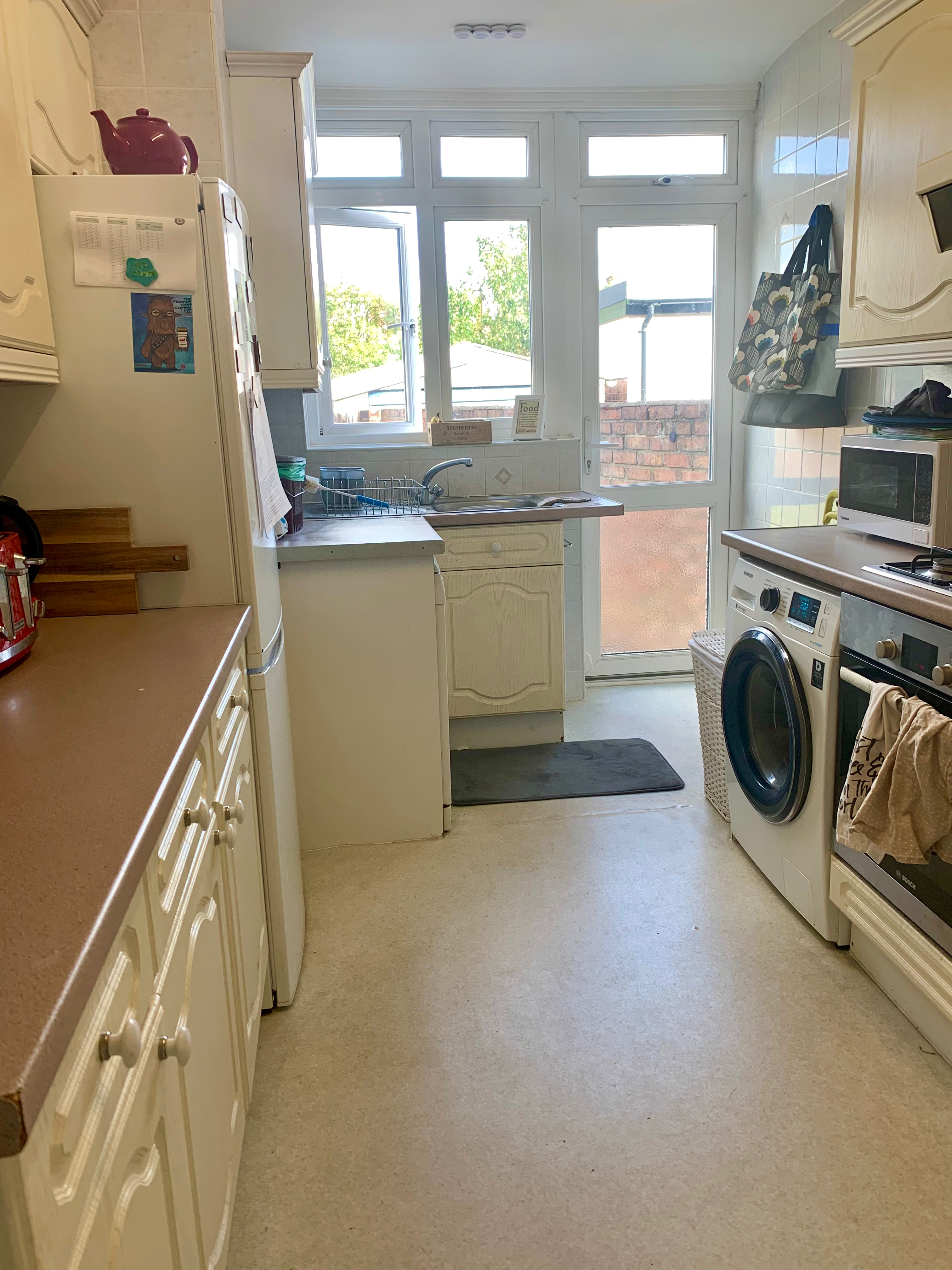
My kitchen is the opposite of ‘open concept’. With one door leading to our back garden and another that properly closes to the rest of the house, you could say my wonky kitchen boasts a closed concept design. Once inside with the door shut, no one can see what you’re up to. If you mistake chili powder for nutmeg, no one is the wiser. At least not right away.

Inside my wonky but lovable kitchen

Three houses ago, in our former teeny, semi-private kitchen, I accidentally poured soapy water on the baby back ribs we had been cooking all day. (Unbeknownst to me, Doug had transferred the BBQ sauce to a bowl and filled the saucepan with soap and water.) I was alone in the kitchen at the time so no one was there to witness my blunder. No one saw me rinse the meat over the sink, transfer it to a fresh baking pan, douse it with BBQ sauce, and return it in the oven.

The best cooks don’t reveal their secrets so I wasn’t about to air mine when we all sat down to eat. Not even when one family member said, ‘These are the best ribs ever’. I didn’t confess until the next morning; If anyone was going to get diarrhea that night, it would be from soap, not the power of suggestion. (No one did, by the way.)

All this to say, closed concept kitchens aren’t without their perks, especially during lockdown when you’re tired of being with those you love. Sometimes a closed kitchen door is in everybody’s best interest. Inside a closed kitchen, every decision is yours. Add peas to the chili or Marmite to the scones? Your call. (For the record, Marmite doesn’t exist in this house.) No one’s around to question what you’re doing, and that can feel freeing.

On the contrary, open concept kitchens promote questions and discussion and community. Those who’ve been invited into the mess of your kitchen feel a certain freedom to offer advice: Your soup’s bubbling over. You may want to lower the heat. Encouragement: The pie smells amazing. And warning: Do you really want to pour soap on the meat? The people in your kitchen pitch in and lighten your load; they chop veg or wash dishes or even take out the rubbish.

And while people can be exhausting, and cooking and living might seem easier without the disappointment and miscommunication that comes with interacting with each other, we were not designed to go it alone. Left on our own we can hide our struggles. Cover our mistakes. Become delusional even, begin to think we’re something that we’re not.

It’s tempting to close the door and not let anyone enter the nitty-gritty kitchen areas of our lives. It’s often easier. But unchecked independence grows into isolation, which breeds a strong sense of rightness in my own eyes. A limited, narrow perspective, oblivious to blind spots. We all have them. It’s human nature. And we all need someone else to gently point them out- someone who loves the Lord and wants the best for us, and is aware of the splinters in their own eyes. Someone like Nathaniel, who broke through King David’s toxic stubbornness (2 Sam. 12)

One reason God gave us the Church is so that we can foster relationships with fellow believers whose lives reflect a heart to please God. To engage in mutual challenge, even criticism. These friendships, and they will be limited in quantity, require a certain type of open concept living. How has this played out for me personally?   

Once I took it upon myself to plan a certain ministry event. My heart was in the right place: stepping in and serving would benefit many. It was also in the wrong place: I wanted to do everything my way. One afternoon a steadfast woman from church rang me up. “It’s best if we organize team,” she said graciously. “One person shouldn’t be in charge.” I need The Church.

Another time I thought it was right and necessary for me to point out something I thought was very wrong. A different woman, also steadfast, listened patiently to my very valid grievance and then said simply, “You can’t do that,” and explained why. She was right. I need The Church.

We won’t heed every piece of advice. But when we look back on our past year, we should be able to pinpoint specific conversations, times of earnest prayer, and moments we’ve been challenged. We should see how others have influenced our decisions. If we don’t see any evidence of this type of open concept living, we may need to intentionally open the door. Let someone in. Which may mean tearing down a wall we’ve constructed.

As the Church we’re to:

confess our sins to one another and pray for one another so we can be spiritually healed (James 5:16)

encourage and build one another up (1 Thes. 5:11)

remind each other the truth of God’s word, even in song (Col 3:16)

bear one another’s burdens and struggles (Gal. 6:2)

proclaim Christ (1Peter 2:9)

show hospitality to each other (1Peter 4:9)

at times rebuke one another (Luke 17:3)

This list is not exhaustive, nor will any church ever get this completely right. Being a part of the Body is messy and difficult with seasons of both joy and discouragement. If you stick around long enough, you will be hurt by someone and, most likely, hurt someone. But an isolated, hardened heart is so much worse and destructive.

And although working and communicating and putting up with fellow cooks in the kitchen can be a challenge, because we all bring our own set of sticky problems to the table, God gives grace and gifts and blessed humility and community and sustenance.

So open the door and let the Church in.

Closed kitchen from the outside